


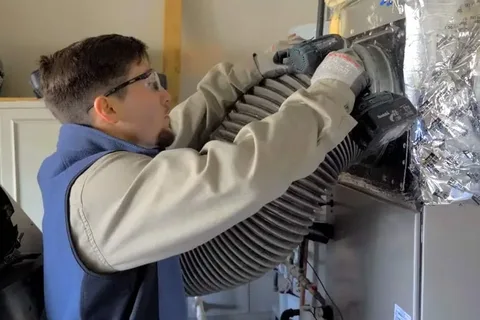
Daily comfort often depends on heating and cooling systems running quietly in the background, yet many older systems hide moisture and debris in places people rarely consider. HVAC cleaning assessments frequently reveal microbial hotspots tucked into tight corners and damp layers that never see airflow. Understanding where these growth zones form helps explain why HVAC cleaning in Columbia TN plays such an important role in long-term system health.
Condensation Pockets Inside Return Ducts That Foster Trapped Moisture
Return ducts pull air back toward the air handler, and in the process, they often move warm air past cooler sheet metal. This temperature difference creates condensation that settles into small pockets or low points along the duct line. Those pockets trap moisture long enough for microbial activity to begin forming layers that cling to the duct interior.
The issue grows worse in homes where ducts are older or have minor sags. Water collects instead of draining, and because these areas sit in darkness, microbial growth can spread without any visible signs. Air duct cleaners near me often find that these condensation pockets become early sources of system-wide contamination.
Dust-laden Blower Compartments Harboring Unnoticed Biofilm
Blower compartments accumulate layers of dust from years of recirculating air. The mix of dirt, humidity, and vibration creates the perfect environment for biofilm to establish itself on metal surfaces. Even small patches multiply quickly once moisture enters the compartment.
Air duct cleaning assessments typically identify hidden buildup behind the blower wheel or on the interior housing. That buildup impacts airflow efficiency and can release particles back into the ducts. A professional air duct cleaner in Columbia TN can remove these layers to restore proper movement of conditioned air.
Coil Surfaces Collecting Residue That Feeds Microbial Layers
Coils naturally collect condensation during normal cooling cycles. Over time, dust and airborne particles cling to the wet surface, creating a thin residue that acts as a food source for microbial layers. This residue often hides beneath the coil fins where it remains untouched by basic cleaning attempts.
HVAC cleaning teams often uncover thick microbial films trapped deep between fin rows. These layers restrict thermal transfer, forcing the system to run harder and longer. Regular air duct cleaning in Columbia TN helps slow buildup and maintain efficiency.
Insulation Lining Within Air Handlers Absorbing Damp Air
Air handlers frequently contain internal insulation designed to reduce noise and prevent thermal loss. That insulation can absorb humidity and remain damp long after the system shuts off. Damp material becomes a stable breeding ground for mold-like growth, often spreading wider than expected.
Absorption issues usually appear in older units where insulation has degraded or pulled away from its backing. HVAC cleaning near me often requires replacing compromised insulation entirely to eliminate microbial reservoirs that cannot dry on their own.
Drain Pans Accumulating Stagnant Water Beneath the System
Drain pans sit beneath the coil to catch condensation, but clogs or slow drainage create standing water that lingers for days. Microbial colonies develop along the waterline and spread to the underside of the coil assembly. Stagnant water quickly becomes one of the most active hotspots in the entire unit.
Stagnation problems frequently go unnoticed until HVAC cleaning uncovers cloudy residue or darkened buildup inside the pan. Regular maintenance prevents overflow and discourages microbial activity from reaching nearby ductwork.
Supply Vents Where Settled Particles Create Micro-growth Zones
Supply vents push conditioned air into each room, but dust and debris settle on the vent edges and grill surfaces. Humidity changes allow these particles to absorb moisture, leading to small growth patches that spread outward. The problem develops slowly but becomes more apparent as buildup grows thicker. Vent growth areas usually signal that deeper duct layers contain similar debris deposits. Calling air duct cleaners near me for a full cleanup can help identify where debris first entered the system and how far it has traveled.
Filter Housings Holding Debris That Supports Hidden Spores
Filter housings collect dust on the downstream side where airflow forces debris into small crevices. Moisture from nearby components mixes with this debris, creating micro-layers of trapped particles that support hidden spores. These pockets remain untouched unless the housing is removed during a detailed HVAC cleaning assessment. Some systems use oversized housings where corners remain undisturbed for years. That undisturbed space allows microbial formation to continue quietly, releasing small particles back into the airflow each time the system starts.
Tight Plenum Spaces Capturing Humidity from Daily Cycles
Plenums manage air distribution and pressure, but their tight design traps humid air during cooling cycles. Even small amounts of moisture stick to the inner walls, encouraging microbial film to spread across flat surfaces. Dust and duct debris only accelerate the growth. Areas inside plenums are challenging to reach without the right tools. HVAC cleaning in Columbia TN often includes specialized equipment to remove buildup from corners that standard brushes cannot reach.
Flex Duct Interiors Where Uneven Airflow Leaves Damp Deposits
Flex ducts contain interior ridges that disrupt airflow and allow moisture to collect in uneven patterns. Tiny deposits sit between the ridges, building into microbial patches that stretch across long duct runs. These areas rarely dry completely due to reduced air movement.
A Columbia TN air duct cleaner typically inspects flex duct interiors for early signs of moisture accumulation. If deposits become widespread, replacing sections of flex duct may be the best option. For thorough HVAC cleaning and detailed microbial hotspot removal, Mr. B provides professional service that keeps air systems cleaner, safer, and far more efficient.
